






BHP Appoints New CEO
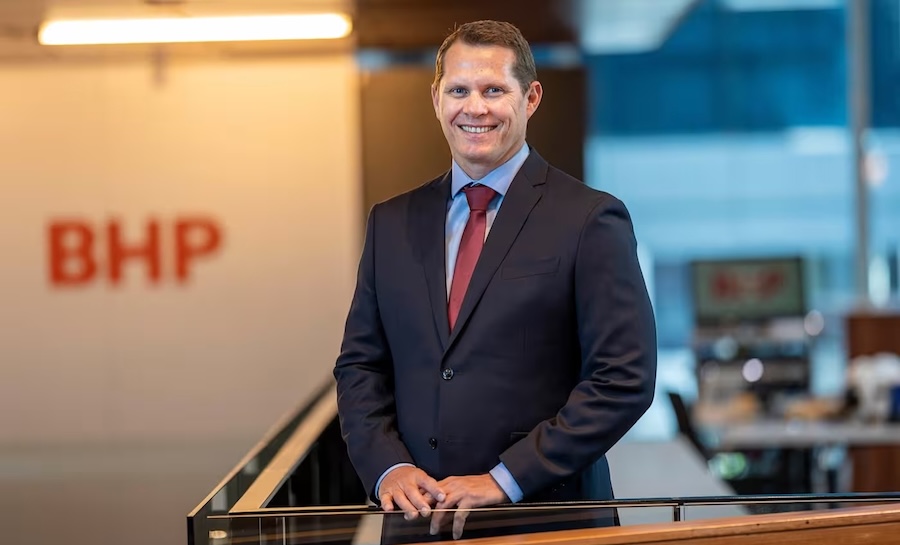
BHP has appointed Brandon Craig as its new chief executive officer, signalling a strategic shift toward copper growth and disciplined capital allocation.
The leadership transition marks the end of Mike Henry’s tenure. His departure aligns with BHP’s typical leadership cycle of around six years.
While speculation linked his exit to the failed Anglo American acquisition, the transition had already been planned. BHP is now entering a new phase focused on long-term growth and operational discipline.
Leadership Transition Comes After Major Portfolio Changes
Mike Henry leaves behind a significantly reshaped BHP. During his tenure, the company exited oil and gas and reduced its coal exposure.
He also approved major growth investments, including the Jansen potash project in Canada. This project has faced cost increases and delays but remains central to future supply.
BHP strengthened its balance sheet under Henry’s leadership. The company returned approximately $80 billion to shareholders while investing heavily in future-facing commodities.
The strategy focused on copper and potash, with around $20 billion allocated to these sectors.
Brandon Craig’s Rise Signals Continuity and Strategic Focus
Brandon Craig’s appointment reflects a planned leadership progression within BHP. He has spent 25 years with the company and held several senior roles.
Craig previously led BHP’s iron ore division during the pandemic. He improved efficiency across the company’s most profitable asset.
He later moved to lead BHP’s Americas division. This role placed copper and potash operations under his control.
This experience positions him to lead BHP’s next phase of growth. His appointment signals continuity in strategy, with a sharper focus on execution.
Copper Becomes BHP’s Primary Earnings Driver
Copper has now overtaken iron ore as BHP’s largest earnings contributor. It accounts for 51% of the company’s first-half profit.
BHP produces around 2 million tonnes of copper annually. Operations span Chile, Peru, and South Australia.
The company plans to increase production to 2.5 million tonnes per year by 2035. Key assets include Escondida and Pampa Norte in Chile.
Copper demand continues to grow due to renewable energy and AI infrastructure. BHP is positioning itself as a global leader in copper development.
Major Copper Projects Drive Future Growth
BHP is advancing several large-scale copper projects. These include the Vicuña project in partnership with Lundin Mining and the Resolution project with Rio Tinto.
The Resolution project in Arizona has gained renewed momentum in the United States. Expansion in South Australia also remains a priority.
These projects support BHP’s long-term strategy to meet rising global copper demand. Execution will play a critical role in delivering these outcomes.
Capital Discipline and Mergers and Acquisitions Strategy
BHP continues to emphasise capital discipline following recent acquisition attempts. The company’s bid for Anglo American highlighted its willingness to pursue large-scale deals.
However, BHP now signals a more cautious approach to mergers and acquisitions.
Craig stated that any future deal “would have to be incredibly compelling” compared to existing opportunities.
He also confirmed that BHP will maintain its current structure. Strong cash flow from iron ore and coal supports investment in growth commodities.
China’s Role in Global Iron Ore Demand
China remains a key market for BHP and the broader Australian mining sector. However, slowing construction and industrial activity are impacting demand.
BHP is also navigating discussions with China Mineral Resources Group. Reports suggest some iron ore grades may face restrictions.
Craig and Henry plan to visit key markets, including China, to strengthen relationships. Maintaining strong customer connections remains a priority.
Shift Toward Americas for Future Mining Investment
BHP is increasingly focusing on the Americas for future investment. Countries such as Chile, Argentina, the United States, and Canada offer supportive policies.
Craig highlighted these regions as key to future growth in mining and resources.
Australia, however, faces increasing competition for investment. Rising energy costs, labour pressures, and tax settings are influencing capital allocation decisions.
He pointed to higher coal royalties in Queensland as an example of changing conditions.
“There is a shift in the gravity of the business,” Craig said. “Australia has to compete.”
What This Means for BHP and the Global Mining Industry
Brandon Craig steps into the CEO role at a critical time for BHP. The company must balance strong growth ambitions with investor expectations.
Copper will remain central to BHP’s long-term strategy. At the same time, capital discipline and operational performance will face close scrutiny.
This leadership transition reflects broader trends in the global mining industry. Companies are prioritising future-facing commodities while managing risk and returns.